

Overview
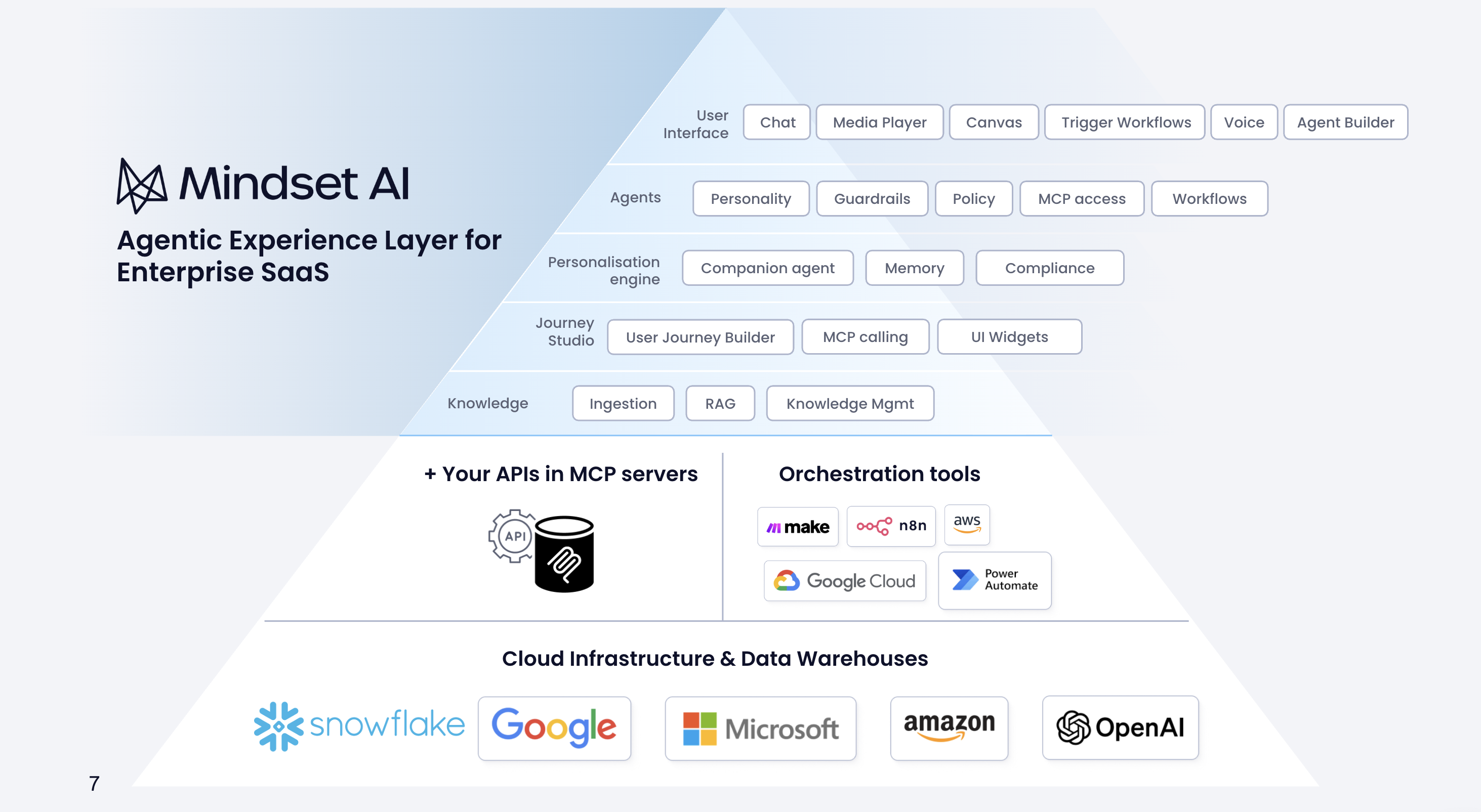
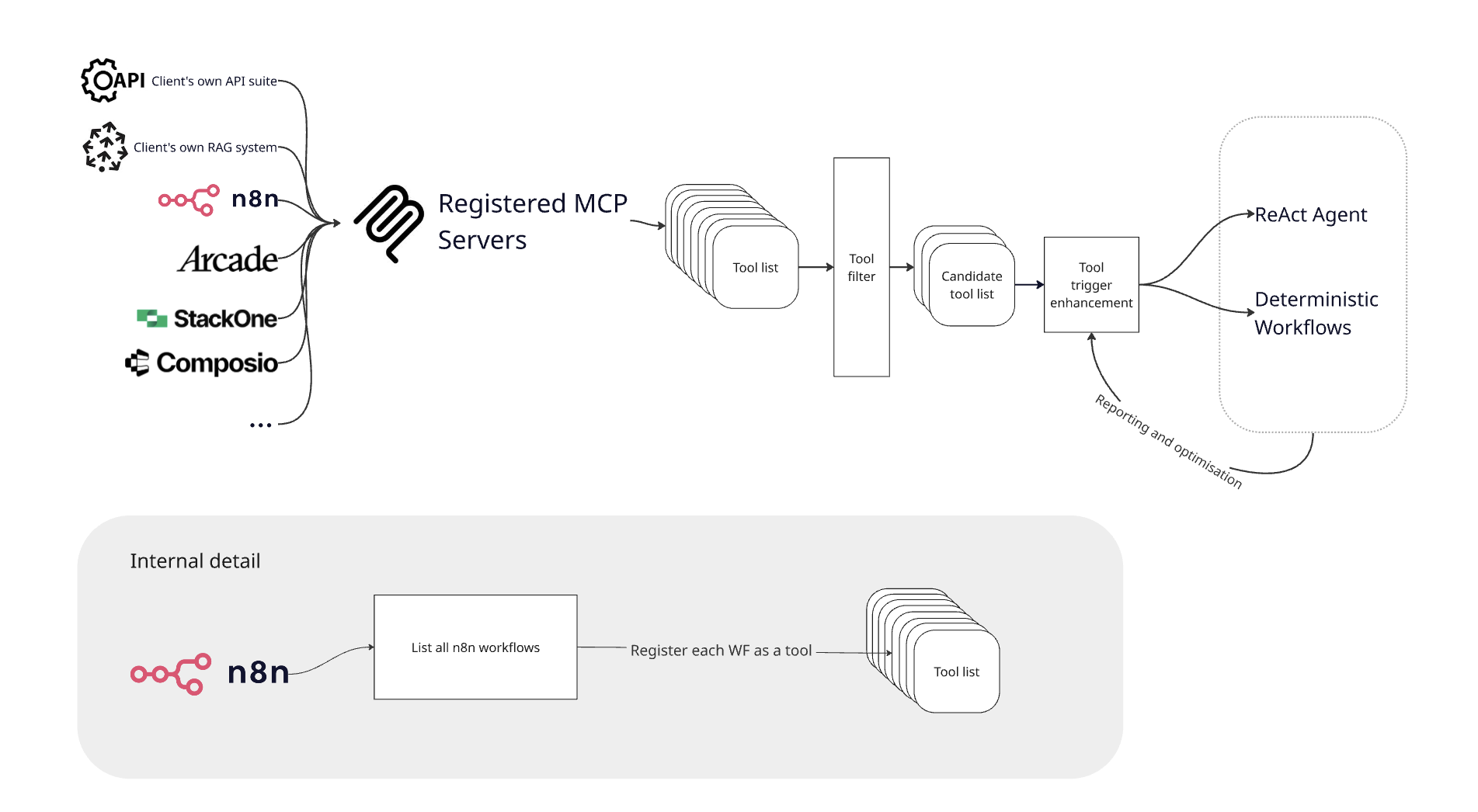
Mindset AI provides the agentic front-end layer—conversational interfaces where users interact with your platform, agents that reason and adapt in real time, interactive UI that responds to user needs, and memory that persists across sessions—connected to the services that make you unique. For most tasks, this layer is all you need. For some use cases, you can make Mindset AI and your product more powerful by adding two optional layers:Orchestration Layer (N8N)
For autonomous back-end processes with no human involvement—nightly syncs, batch processing, event-triggered sequences where actions happen without any user present, with AI-powered data transformation or creation.
Integration Layer (StackOne)
For enterprise system integrations requiring per-tenant OAuth at scale—accessing customers’ HRIS, ATS, CRM with normalized data across 200+ systems, surfacing 3,000+ agent actions and tools as MCPs for your agents built or hosted on Mindset AI.
- Mindset AI agents can trigger N8N workflows and receive results back
- Mindset AI agents call StackOne’s AI tools for customer external systems (agents reason over normalized data)
Most User-Driven Tasks Don’t Need Workflows
Anthropic defines the core distinction: Workflows: “Systems where LLMs and tools are orchestrated through predefined code paths.” Agents: “Systems where LLMs dynamically direct their own processes and tool usage, maintaining control over how they accomplish tasks.” Another way to view this distinction is the degree of deterministic control you need over a task. Each option should be seen as a tool for the job.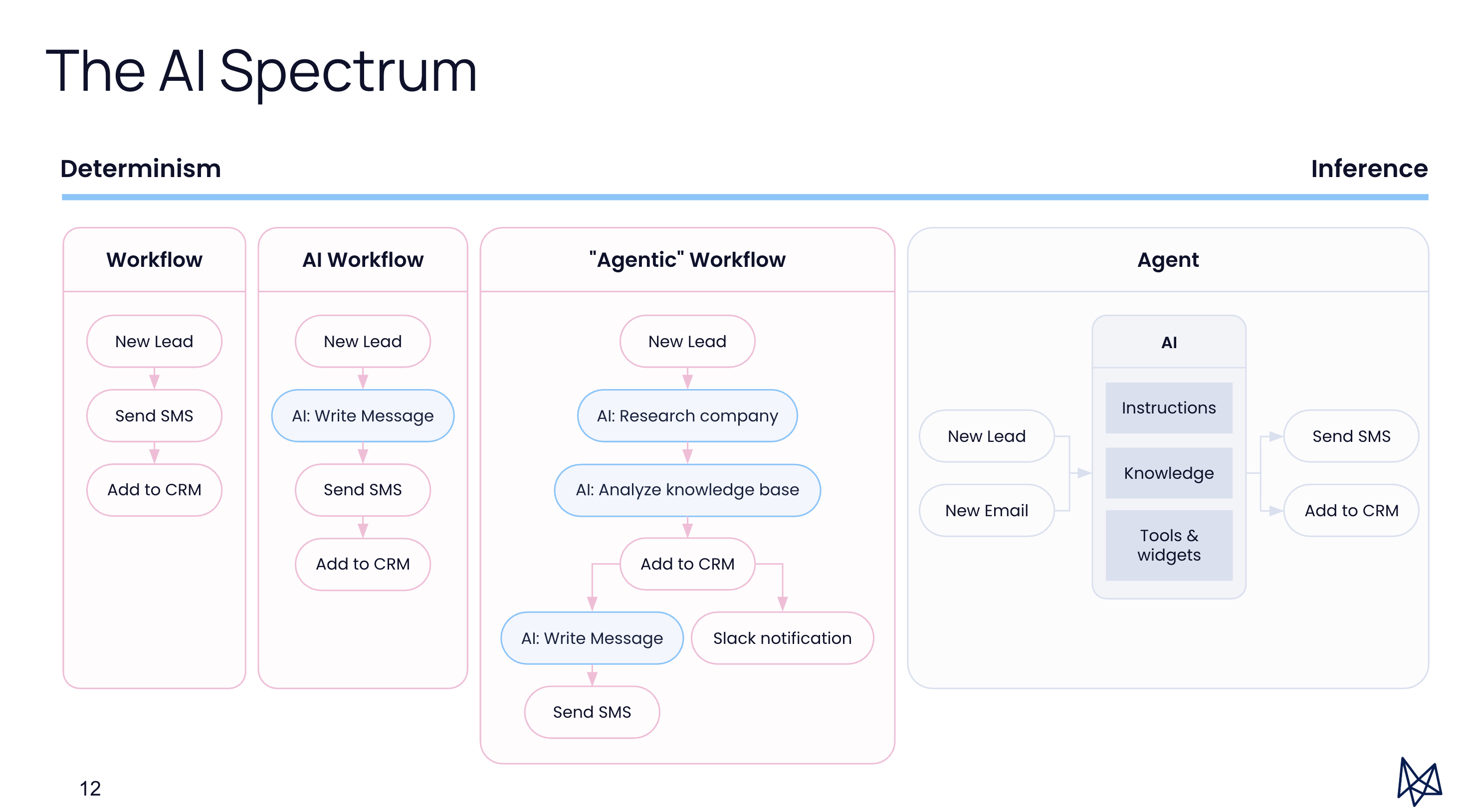
Why Agents Handle Most Tasks
Many people see workflows online and believe this is the best way of enabling AI to complete tasks for users. We, much like Anthropic, LangChain, and many others, don’t believe this is the case. Most tasks in B2B SaaS applications don’t require deterministic control. An agent can reason through the task—figuring out what’s needed, selecting the right tools, adapting when users change their minds, and hopping between options as they explore possibilities. This is where agents excel: interactive experiences where humans make decisions, and the system adapts in real time. Some tasks are purely autonomous. Nightly syncs, batch processing, event-triggered sequences with no user present. These benefit from orchestration platforms that ensure execution and provide audit trails, and from AI nodes that can transform the data they receive. This is why Mindset AI focuses on conversational experiences where agents reason and users make decisions. When you need autonomous back-end processes, orchestration platforms like N8N and Make.com excel. When you need enterprise integrations, StackOne provides enterprise integration support, per-tenant OAuth, agent actions as MCPs, and normalized data.The Agentic Front-End: Mindset AI
Mindset AI provides the agentic front-end for B2B SaaS platforms. It’s the infrastructure layer that lets your users accomplish tasks through conversation—agents that understand context, remember preferences, take actions on their behalf, and adapt as goals change mid-conversation.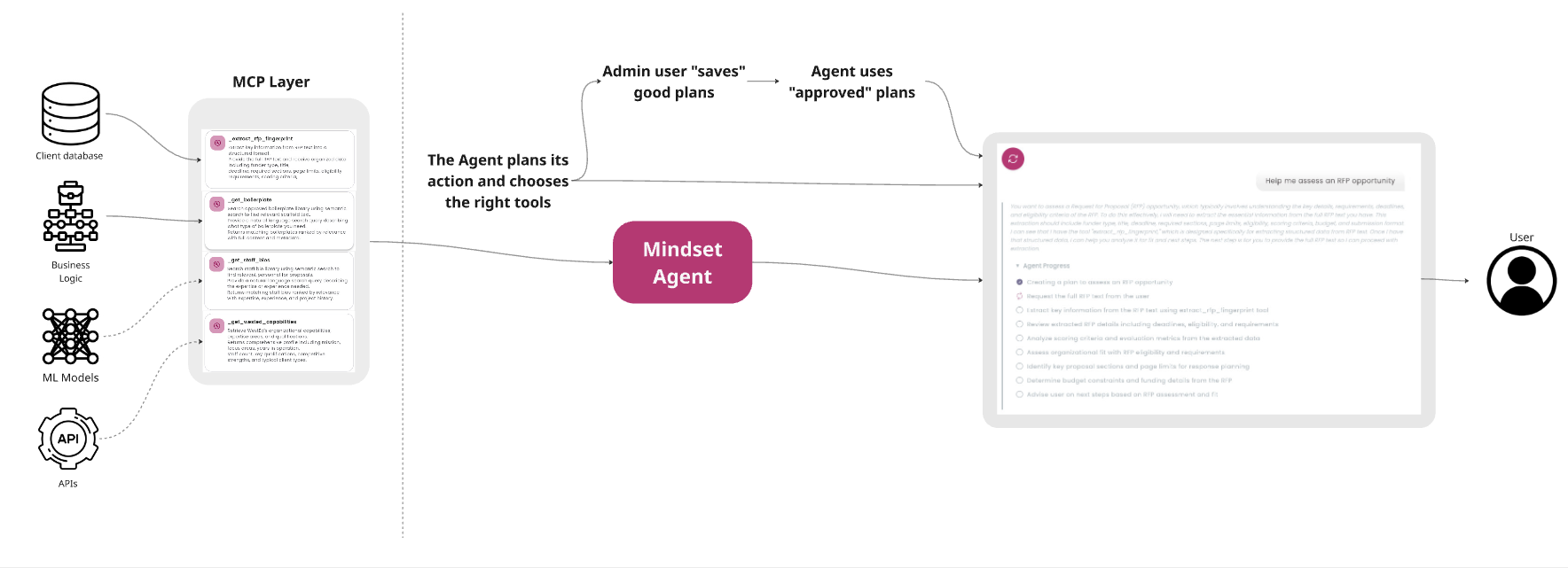
What Mindset AI Provides
Agent reasoning runtimeThe reasoning engine that plans, selects tools, executes actions, and adapts. When a user asks a question, the agent determines what’s needed, invokes the appropriate tools (your APIs exposed as MCP servers), and responds—adjusting as the user changes direction. Interactive UI
Widgets within conversations—data cards, tables, editable forms, charts, action buttons. Not just text. Your business users build these by describing what’s needed; Widget Studio generates them. Memory
User-level, cross-session memory. The agent remembers what happened in March, what Priya preferred, and where the conversation left off. GDPR and EU AI Act compliant. Multi-tenant architecture
Each customer is isolated—its data, credentials, and configuration are separate from those of other customers. Multi-surface deployment
Same agent deployed to your web app, mobile, Slack, and Microsoft Teams. Conversation continues across surfaces. MCP infrastructure
Your developers build MCP servers that expose your platform’s capabilities. These run on Mindset AI’s infrastructure, built on the open MCP protocol, and are portable. Learn more about building MCP servers → This covers the vast majority of agentic use cases: conversational interfaces where users interact with your platform, see a rich UI, and receive responses that adapt to their needs.
When You Need Autonomous Back-End Processes: Add N8N
Some processes run entirely without human involvement—nightly data syncs, batch processing, event-triggered sequences. N8N is a workflow orchestration platform that excels at autonomous execution. When you need it: Autonomous back-end processes with no human involvement (nightly syncs, batch jobs, event-triggered sequences) When you don’t: If users are interacting, making decisions, or changing their minds, the agent handles it.When You Need Enterprise Integrations: Add StackOne
Accessing customer external systems (HRIS, ATS, CRM) at scale requires per-tenant OAuth management and normalized data, plus agent actions surfaced as MCP tools to call. StackOne is an integration platform that handles this. When you need it: Enterprise system integrations with per-tenant OAuth at scale (HRIS, ATS, complex CRMs) and surfacing agent actions via MCPs When you don’t: If you’re only accessing your own platform’s data or APIs, or need basic integrations (Google Drive, SharePoint, Slack, Teams)All Become Tools for the Mindset AI Layer to Call
N8N and StackOne are layers that the agent calls as tools when needed.- Mindset AI can trigger N8N workflows and receive results back
- Mindset AI can call StackOne for customer system access
Decision Flow: Which Combination Do You Need?
Industry Examples
Learning Platform with AI Coach
Architecture: Mindset AI onlyUsers interact with agents to get personalized coaching, complete exercises, and track progress. All data lives in your platform. No autonomous processes needed.
HR Platform with Employee Onboarding Agent
Architecture: Mindset AI + StackOneAgent helps new hires complete onboarding tasks while pulling data from the company’s HRIS, payroll system, and benefits platforms via StackOne’s normalized APIs.
Recruitment Platform with AI Interview Scheduler
Architecture: Mindset AI + N8NAgent helps recruiters schedule interviews interactively. N8N handles nightly calendar sync, automated reminder emails, and batch updates across candidate records.
Talent Management Platform
Architecture: Mindset AI + StackOne + N8NAgents help hiring managers post jobs and review candidates. StackOne connects to the company’s ATS and HRIS. N8N runs nightly syncs of candidate data and triggers automated workflows when hiring stages change.